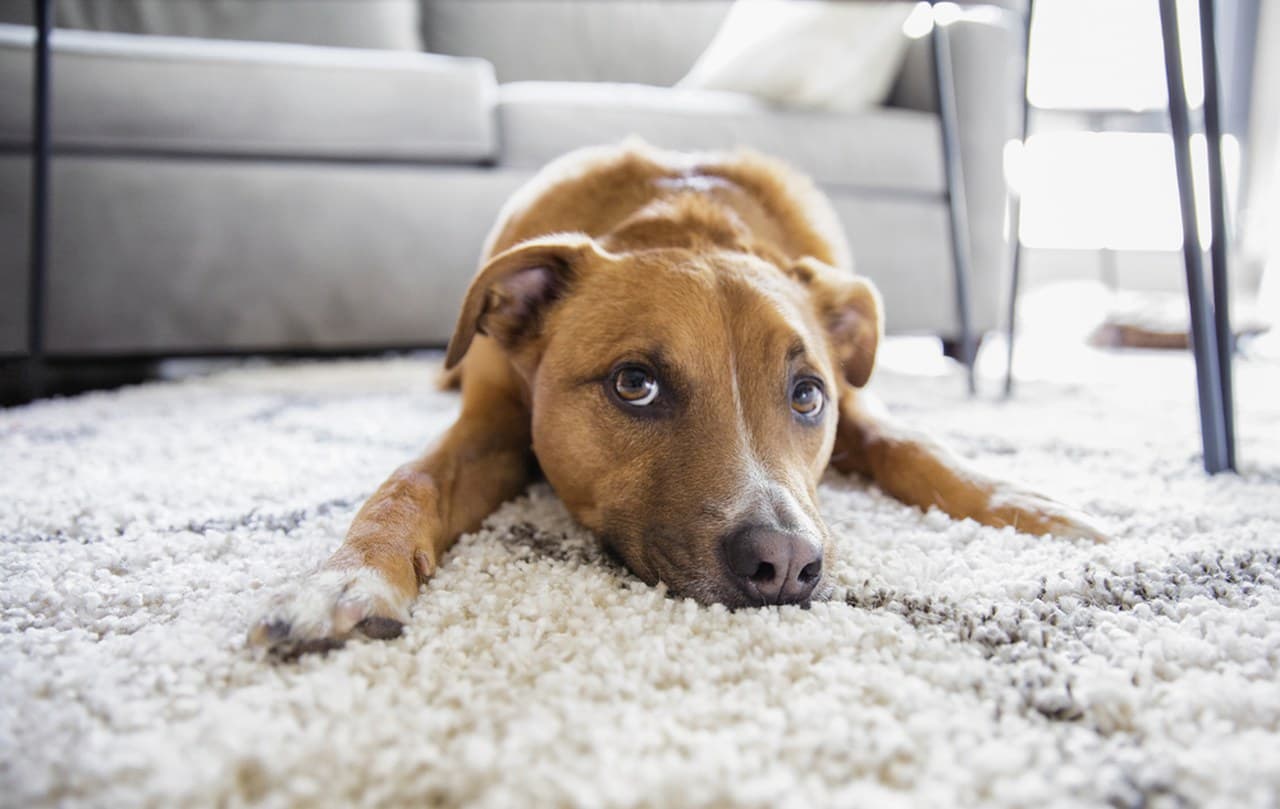
If you've got a dog or a cat in Dallas, you've dealt with this one. The puppy that hasn't quite figured out the back door, the older dog having an off week, the cat protesting something only the cat understands. A pet accident on carpet is a stain, but it's also a smell, and the smell is the part that brings people to us. Handle it right in the first few minutes and you can usually beat both. Handle it wrong and you can lock in an odor that comes back every humid week.
Move fast, but be gentle
The first thing is to get the moisture up before it soaks down into the pad. Grab a thick stack of paper towels or a clean white cloth and press straight down. Stand on it if you have to. You want to wick up as much as possible. Don't rub, because rubbing pushes the mess deeper and frays the fiber. Keep swapping in dry towels and pressing until you're not pulling up any more moisture.
Once you've blotted it, rinse the spot with cool water and blot again. This dilutes what's left in the surface fiber and pulls more of it out. Cool water only. Hot water can set both the stain and the proteins that cause the smell.
Why the smell keeps coming back
Here's the part that catches people off guard. You clean the spot, it looks fine, it smells fine, and then on a warm humid day the odor is back like you never touched it. That's because pet urine doesn't stay on the surface. It soaks through the carpet into the pad and sometimes into the subfloor underneath, and it carries crystallized salts that reactivate with moisture. So when North Texas humidity climbs, those salts pull water out of the air and the smell comes right back to life.
The other reason is the wrong cleaner. A lot of household and drugstore products mask the odor with fragrance or use ammonia-based formulas, and ammonia actually smells like urine to a dog, which can encourage the pet to go back to the same spot. You end up training the behavior you're trying to stop.
What actually works on the smell
Pet odor is a protein problem, and you have to break the protein down, not cover it up. Enzyme-based pet cleaners from the store can handle a fresh, surface-level accident on synthetic carpet. Blot, rinse, apply the enzyme cleaner per the directions, and give it time to work.
Where store products fall short is when the accident has soaked into the pad, when it's an old spot you didn't know about until the smell tipped you off, or when there's been more than one. At that point the source of the odor is below the carpet where a spray bottle can't reach.
That's what our odor and stain removal service is built for. We treat down to the source rather than just the surface, breaking down the organic material that's actually causing the smell instead of perfuming over it. Because our process is low-moisture and soap-free, there's no soaked pad left behind to grow mildew and no sticky residue to attract dirt, and everything we use is non-toxic and safe around the pets and kids who live on that floor. If you've got a spot that won't quit, a blacklight in a dark room will often show you every accident you didn't know about.
Keeping it from happening again
Cleaning the smell out completely is the best deterrent, since a spot that no longer smells like a bathroom to your dog is a spot they're less likely to return to. Beyond that, the usual things help: stick to the potty schedule with a young pup, watch an older dog for changes that might mean a vet visit, and deal with an accident the same day instead of letting it set.
A pet accident doesn't have to mean living with a smell that comes and goes all summer. If you've cleaned a spot and it keeps coming back, the odor is deeper than your cleaner can reach. Call Safe-Dry of Dallas at 214-838-7852 or schedule online, and we'll get rid of the smell at the source.